
Bathroom & Kitchen Mold in Dayton, Ohio
Bathroom and kitchen mold in Dayton, Ohio is the most common kind and often the smallest. Some of it you can clean yourself. Some of it means a hidden leak. When it's more than a weekend job, describe it once and independent Miami Valley companies reply with free quotes.
Get a Free Quote Call (937) 466-8339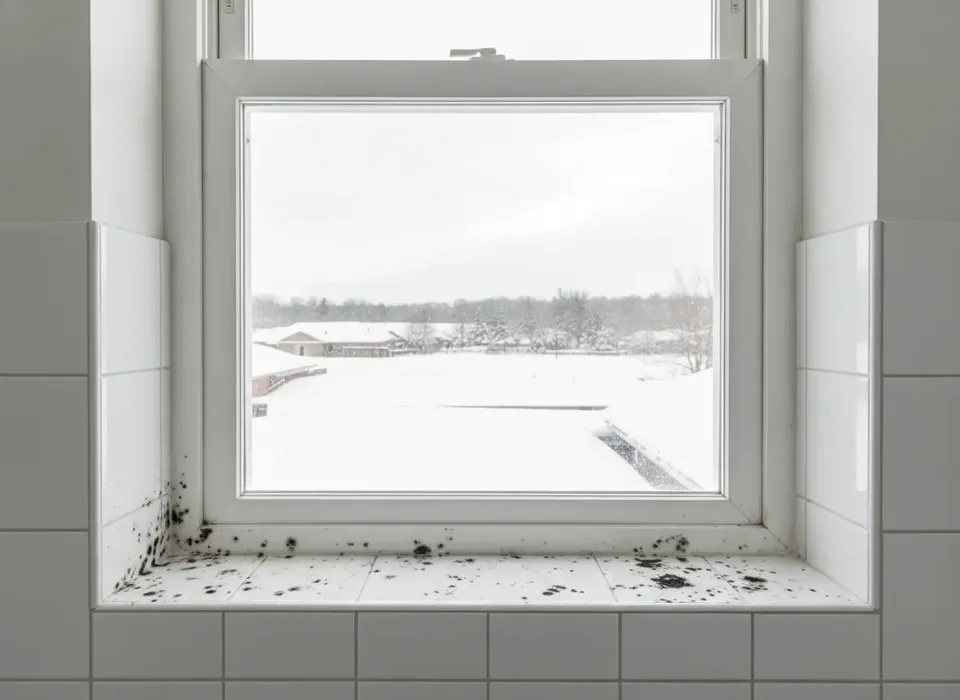
What's going on
- Spots on grout, caulk and ceiling paint above the shower: usually surface growth from humidity.
- Black spots on window sills and frames in winter: condensation on cold glass.
- Soft drywall or loose tile near the tub or shower: water getting behind the surface.
- A warped or stained floor under the sink or dishwasher: a slow leak.
- A musty smell from a cabinet or behind the refrigerator: often a supply line or drain leak.
Surface growth is mostly a ventilation problem. Growth that comes back, or that sits on soft materials, usually means water is getting where it shouldn't.
Clean it yourself or call a company?
EPA says a homeowner can often clean an area under about 10 square feet, roughly a 3 ft by 3 ft patch. Use soap and water, wear gloves and a mask, and dry the surface. Public Health - Dayton & Montgomery County does not recommend bleach.
Call a company when:
- The area is larger than about 10 square feet, or it keeps coming back.
- Drywall is soft, tile is loose, or the cabinet floor is swollen.
- You suspect a leak inside a wall or under a shower pan.
- Someone in the home is sensitive to mold. See a doctor about symptoms.
Winter condensation in Dayton, Ohio homes
Dayton sees about 110 nights a year at or below freezing (NOAA 1991 to 2020), and average humidity runs about 70%. Warm, moist bathroom and kitchen air hits cold window glass, exterior walls and ceiling corners and condenses. Older homes make it more likely: Dayton's median year built is 1951, and many homes still have older windows, little wall insulation and bath fans that are weak or missing.
What helps:
- Run the bath fan during showers and for a while after. Make sure it vents outside, not into the attic.
- Use a range hood that vents outside when cooking, and cover pots.
- Wipe window sills dry on cold mornings.
- Keep indoor humidity below 60%, ideally 30% to 50%, as EPA advises.
If the bath fan vents into the attic, also read the attic mold page.
What the companies typically do
Find the leak
Moisture meters around the tub, shower, toilet, sink base and dishwasher. A plumber may need to fix a supply line, drain or shower pan.
Contain the room
Sheeting over the doorway and HEPA filtration, even for a small job, so dust stays in the bathroom or kitchen.
Remove and clean
Moldy drywall, cabinet floors or backer board come out. Framing is HEPA-vacuumed and cleaned.
Dry and check
Dehumidifiers until materials read dry, then readings or a clearance check before tile and drywall go back.
What bathroom mold removal costs
| Item | Typical range | Source |
|---|---|---|
| Bathroom | $500–$1,500 | Fixr 2025 |
| Mold remediation, per sq ft | $10–$25 | This Old House 2026 (Fixr: $10–$30) |
| Typical remediation job | $1,200–$3,750 (avg ≈ $2,300) | This Old House 2026 |
Plumbing repairs, new tile, cabinets and countertops are usually separate. See the cost guide for a calculator.
Permits, older homes and rentals
Permits. Cleaning, tile, cabinets and similar finish work usually need no permit. Plumbing work that replaces or moves pipes, valves or fixtures, and electrical or HVAC work such as a new fan circuit, generally do. Check with City of Dayton Building Inspection or your city's building department.
Older homes. Before tear-out in a pre-1980 kitchen or bath, ask whether old floor tile and mastic or ceiling texture will be tested for asbestos. For pre-1978 painted window sills and trim, ask whether the company is an EPA Lead-Safe Certified Firm.
Rentals. In Dayton rentals, plumbing, electrical and HVAC work must be done by a City-registered contractor. Renters can read the rental and tenant mold page.
Insurance. A sudden burst supply line may be covered; a slow drip that caused mold over months usually isn't. Ask your agent.
When it's urgent
- Water is leaking now. Shut off the valve under the sink or toilet, or the main.
- Water is near outlets or lights.
- A ceiling below a bathroom is stained or sagging.
Questions to ask
- Where is the water coming from, and who fixes it?
- Can you send a certificate of insurance?
- Is the plumber City-registered if this is a Dayton rental?
- Will I get a written, itemized contract, with the 3-day cancellation notice if we sign at my home?
- Will you test suspect old tile or texture before removing it?
Bathroom and kitchen mold questions
Can I clean bathroom mold myself?
Often yes, if the area is under about 10 square feet and the surface is hard and sound, according to EPA. Use soap and water, gloves and a mask, then dry it. Public Health does not recommend bleach. If it keeps coming back or the drywall is soft, there's likely a leak.
How much does bathroom mold removal cost?
Fixr (2025) puts bathroom mold remediation at $500 to $1,500. Jobs that involve opening a shower wall, replacing a cabinet floor or fixing plumbing cost more, and those repairs are usually priced separately. The companies' quotes are based on what they find.
Why do my windows get moldy every winter?
Warm, humid indoor air condenses on cold glass and frames. Dayton averages about 110 freezing nights a year, so this is common. Run bath and kitchen fans that vent outside, keep humidity below 60%, wipe sills dry, and clean small spots with soap and water.
Why does mold keep coming back under my sink?
Usually because water is still getting there. Public Health notes mold returns when the water problem isn't fixed. Check the supply lines, drain and dishwasher connection. If the cabinet floor is swollen or the wall behind is soft, ask a company to open it up and dry it.
Do I need a permit to fix a bathroom after mold?
Cleaning, tile and cabinets usually don't need one. Replacing or moving pipes, valves or fixtures, and electrical or HVAC work, generally do. Ask the contractor to confirm with City of Dayton Building Inspection or your city's building department.
Get bathroom and kitchen mold quotes in Dayton, Ohio
Tell us which room, roughly how big the area is, whether there's a leak, and whether you own or rent. We pass it to independent companies in the Miami Valley, and they reply with quotes.
Independent Miami Valley companies reply to you directly. There is no obligation, and you choose who to hire. Prefer to talk? Call (937) 466-8339
Seeing or smelling mold? Get a clear plan.
Free, no-pressure quotes from independent companies across Dayton, Kettering, Beavercreek, Huber Heights and the Miami Valley.