
Crawl Space Mold in Dayton, Ohio
Crawl space mold in Dayton, Ohio is easy to miss because few people ever look down there. Describe the smell, the floors or what you found and independent Miami Valley companies reply with free quotes. Here is what causes it, what the work involves and what it tends to cost.
Get a Free Quote Call (937) 466-8339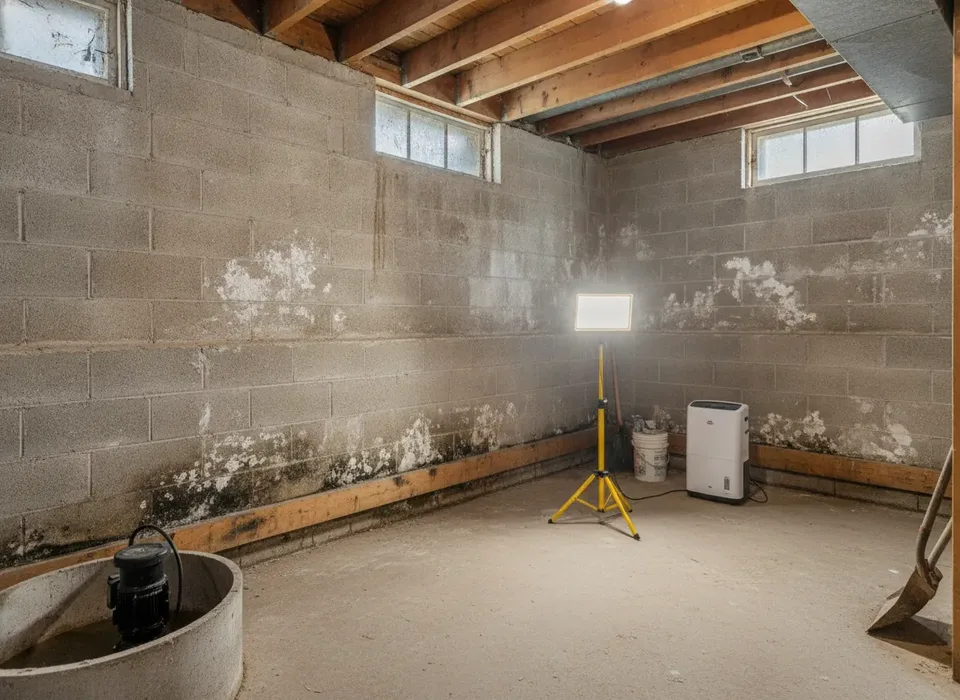
What's going on under the floor
Basements are common in the Dayton area, but plenty of homes have a crawl space somewhere: under an addition, a sunroom, a back porch room, or beside a partial basement. These spaces are dark, rarely checked and often damp.
Signs to watch for:
- A musty smell upstairs, worse in summer or when the furnace runs.
- Floors that feel soft, cup or squeak more than they used to.
- Insulation sagging or falling from between the joists.
- Dark spots or white fuzz on joists and the underside of the subfloor.
- Water droplets on ducts or pipes.
Why crawl spaces get moldy here
Three things usually combine. First, ground moisture: bare soil gives off water vapor all year, and without a good vapor barrier it ends up in the wood. Second, summer air: average humidity in Dayton runs about 70%, and warm humid air drawn through vents condenses on cooler joists, pipes and ducts. Third, leaks: a dripping drain line, a supply leak or poor gutters and grading that send roof water toward the foundation.
Rain never really lets up either. NOAA normals for Dayton International Airport show 41.33 inches of precipitation a year, with every month above 2.35 inches, and by late October 2026 the airport gauge had already passed its full-year normal (NOAA daily data).
Why it matters upstairs: air moves up from a crawl space into the living area, so a musty crawl space usually means a musty house.
What crawl space companies typically do
Inspect and measure
Moisture readings on joists, sill plates and subfloor; a look at the vapor barrier, vents, plumbing, ducts and outside drainage.
Fix the water
Leak repairs, gutter and grading changes, or drainage, often by a separate trade.
Remove and clean
Wet or moldy insulation comes out. Framing is HEPA-vacuumed and cleaned, sometimes sanded.
Control moisture
A new or repaired vapor barrier, and sometimes sealing the space and adding a dehumidifier.
Check and document
Readings after drying, ideally an independent clearance check, and photos you can keep.
Sealing a crawl space (often called encapsulation) works well in some homes and is overkill in others. Ask each company why it recommends what it does, and compare. If a dehumidifier needs a new circuit, or ducts or a furnace are moved, ask whether a permit is needed.
Older homes: questions before tear-out
Dayton's median year built is 1951, and 85.4% of its homes were built before 1980. Crawl spaces in older homes can hold pipe or duct insulation that may contain asbestos. Ask whether suspect materials will be tested before anything is disturbed. Asbestos licensing in Ohio is handled by Ohio EPA, and larger asbestos jobs need a licensed abatement contractor.
What crawl space mold removal costs
| Item | Typical range | Source |
|---|---|---|
| Crawl space | $500–$2,000 | Fixr 2025; This Old House 2026 |
| Mold remediation, per sq ft | $10–$25 | This Old House 2026 (Fixr: $10–$30) |
| Typical remediation job | $1,200–$3,750 (avg ≈ $2,300) | This Old House 2026 |
Vapor barriers, encapsulation, drainage and dehumidifiers are often priced as separate line items. Ask for an itemized estimate, and see the cost guide for the calculator.
Insurance, permits and selling
Insurance. Mold is usually covered only after a covered, sudden water loss, such as a pipe that burst in a freeze. Slow seepage and long-term humidity usually aren't. Check your policy with your agent.
Permits. Cleaning and removing insulation usually need no permit. Plumbing, electrical, HVAC and structural repairs generally do. Check with City of Dayton Building Inspection or your city's building department. In Dayton rentals, plumbing, electrical and HVAC work must be done by a City-registered contractor.
Selling. The Ohio Residential Property Disclosure Form asks about water intrusion and moisture in the basement or crawl space. Keep reports and invoices, and talk to your agent or attorney about the form.
When it's urgent
- Standing water in the crawl space, or a pipe leak you can hear.
- Floors that feel spongy or sag, which can mean rot. Ask about a structural check.
- Someone in the home has symptoms. Any mold can bother sensitive people; see a doctor.
Questions to ask crawl space companies
- Where is the moisture coming from, and what fixes it?
- Do you recommend a vapor barrier, encapsulation or neither, and why?
- Can you send a certificate of insurance?
- Will I get a written, itemized contract, with the 3-day cancellation notice if we sign at my home?
- Will anyone test for asbestos before removing old pipe or duct insulation?
- Will there be readings or a clearance check after the work?
Related: basement mold and mold inspection and testing.
Crawl space mold questions
How much does crawl space mold removal cost?
Published estimates from Fixr (2025) and This Old House (2026) both put crawl space mold remediation at $500 to $2,000. Vapor barriers, encapsulation, drainage and dehumidifiers usually add to that. Quotes from the companies depend on size, access and how much framing is affected.
Can crawl space mold make my house smell?
Yes. Air moves up from a crawl space into the living area, so a damp, moldy crawl space often shows up as a musty smell upstairs, especially in summer or when the heat runs. Fix the moisture and remove the growth below, and the smell usually fades.
Do I need a vapor barrier?
Many crawl spaces with bare or poorly covered soil benefit from one, because the ground gives off moisture all year. Some homes also need drainage, sealing or a dehumidifier. Ask each company what it recommends and why, then compare the reasoning, not just the price.
Should I disclose crawl space mold when selling in Ohio?
We can't advise on what to disclose. The Ohio Residential Property Disclosure Form asks about water intrusion and moisture in the basement or crawl space and whether the home was inspected for mold. Keep your reports and invoices and talk to your agent or attorney.
Get crawl space mold quotes in Dayton, Ohio
Tell us where the crawl space is, how you get into it, what you have seen or smelled and whether there was a leak. We pass it to independent companies in the Miami Valley, and they reply with quotes.
Independent Miami Valley companies reply to you directly. There is no obligation, and you choose who to hire. Prefer to talk? Call (937) 466-8339
Seeing or smelling mold? Get a clear plan.
Free, no-pressure quotes from independent companies across Dayton, Kettering, Beavercreek, Huber Heights and the Miami Valley.