
Basement Mold Removal in Dayton, Ohio
Basement mold in Dayton, Ohio almost always starts with water: seepage through block walls, a sump pump that couldn't keep up, a sewer backup, or humid summer air meeting a cool wall. Describe what you see or smell and independent Miami Valley companies reply with free quotes.
Get a Free Quote Call (937) 466-8339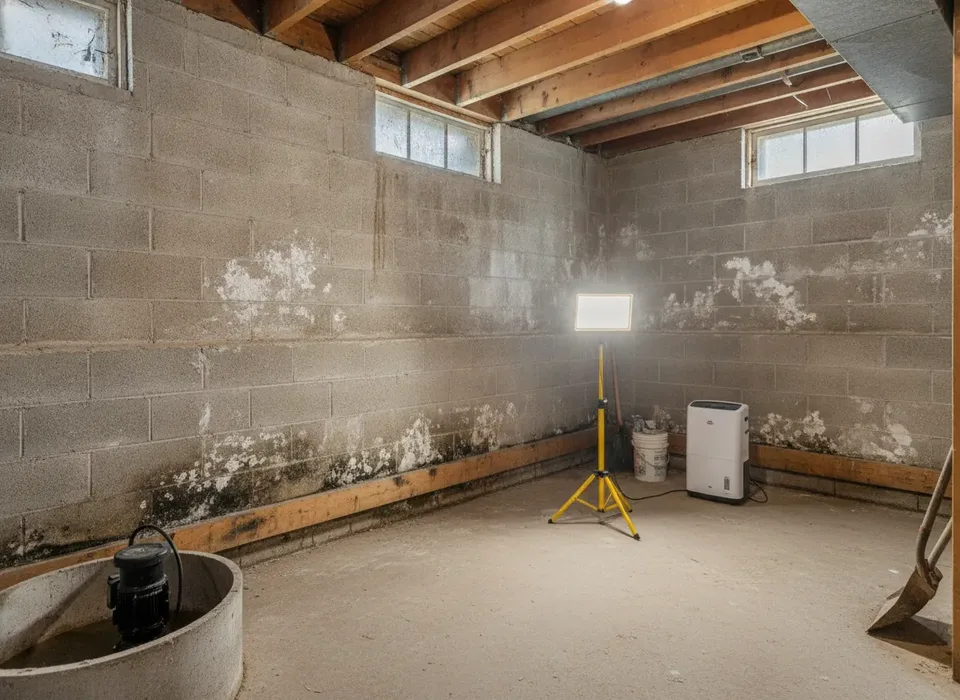
What's going on in your basement
The signs are usually easy to spot once you know them:
- A musty smell that is stronger after rain or in late summer.
- White, chalky deposits on block or poured walls.
- Damp carpet tack strip, or dark spots at the bottom of drywall.
- Mold on stored cardboard boxes, wood shelves or framing near the floor.
- Water stains or rust around the sump pit, floor drain or water heater.
Mold is the symptom. The question every company should answer first is where the water comes from.
Efflorescence or mold?
The white crust on many Dayton basement walls is often efflorescence: mineral salts left behind when water moves through concrete or block and evaporates. It is crystalline, crumbles to powder and sits on masonry. Mold looks fuzzy or spotty, comes in many colors and grows on things that feed it, like wood, paper, drywall and dust.
Efflorescence isn't mold, but it is a sign that water is passing through the wall. Where it shows, check nearby framing, drywall and stored items for growth.
Why Dayton, Ohio basements get wet
Basements are common across the Dayton area, and most homes here are decades old. Dayton's median year built is 1951. Much of the area sits in a river valley over the Great Miami Buried Valley Aquifer, saturated sand and gravel fed by the rivers. Homes near the Great Miami, Stillwater and Mad rivers and their creeks can be prone to seepage and depend on their sump pumps.
The weather adds steady pressure. NOAA normals for Dayton International Airport show 41.33 inches of precipitation a year, with April and May the wettest months, and by late October 2026 the airport gauge had already passed its full-year normal (NOAA daily data). In summer, warm humid air condenses on cool basement walls and slabs even when no water leaks in.
After the 1913 Great Dayton Flood, the Miami Conservancy District built dams that protect against big river floods. They don't stop seepage through a basement wall, a failed sump pump or a sewer backup.
Sump pumps, finished basements and sewer backups
Sump pumps. A pump that fails during a long rain can put inches of water on the floor in hours. Check that it runs, that the discharge line carries water away from the foundation, and whether you have a battery backup. Changes to sump discharge or plumbing may need a permit, so ask the contractor to confirm with your building department.
Finished basements. Drywall, carpet, pad and paneling hide water. Mold often grows on the back of drywall and on the bottom plate long before anything shows. Companies typically cut small inspection openings, then remove wet drywall a foot or more above the highest damage.
Sewer backup. Sewage brings bacteria as well as water. Porous materials it touched, like carpet, pad and drywall, are usually removed rather than cleaned, and the area is disinfected before drying.
Dehumidifiers
EPA advises keeping indoor humidity below 60%, ideally between 30% and 50%. A dehumidifier sized for the space, draining to a floor drain or sump, is one of the cheapest ways to keep a Dayton basement from getting musty again. A small hygrometer tells you whether it is working. A dehumidifier won't keep up with water coming through a wall, though.
What basement mold companies typically do
Find the water
Moisture readings along walls, floors and framing, plus a look at the sump, gutters, grading and plumbing.
Contain and filter
Sheeting seals the basement stairs or work area, and a HEPA negative air machine runs during the work.
Remove and clean
Wet drywall, insulation, carpet and stored cardboard come out. Framing and block are HEPA-vacuumed and cleaned.
Dry and control humidity
Dehumidifiers and air movers run until materials read dry, and a long-term humidity plan is set.
Clearance and rebuild
A visual check and readings, ideally an independent clearance test, then rebuild once the water source is fixed.
What basement mold removal costs
| Item | Typical range | Source |
|---|---|---|
| Basement | $1,500–$4,000 | Fixr 2025 (This Old House: $500–$3,000) |
| Mold remediation, per sq ft | $10–$25 | This Old House 2026 (Fixr: $10–$30) |
| Typical remediation job | $1,200–$3,750 (avg ≈ $2,300) | This Old House 2026 |
Waterproofing, sump replacement, drain work and refinishing are usually separate from mold removal. See the cost guide and calculator, and our article on basement mold in Dayton, Ohio.
Ohio notes: insurance, older homes and selling
Insurance. Mold is usually covered only after a covered, sudden water loss. Seepage, sump failure and sewer backup usually need a separate endorsement, and flood needs a separate flood policy, typically with a 30-day wait (Ohio Department of Insurance 2026 flood release). Check your declarations page and call your agent. More on mold after a sump pump failure.
Older homes. In a pre-1980 basement, ask whether pipe insulation, floor tile and mastic will be tested for asbestos before tear-out. Larger asbestos jobs need an Ohio EPA-licensed contractor.
Rentals. In Dayton rentals, plumbing, electrical and HVAC work must be done by a City-registered contractor.
Selling. The Ohio Residential Property Disclosure Form asks about water intrusion and moisture in the basement or crawl space and whether the home was inspected for mold. Keep reports and invoices, and talk to your agent or attorney about the form.
When it's urgent
- Standing water, a dead sump pump or sewage on the floor.
- Carpet or drywall that has been wet for more than a day or two.
- Water near outlets, the furnace or the water heater. Stay out until power is safe.
Questions to ask basement mold companies
- What is the water source, and who fixes it: you, a plumber or a waterproofer?
- Can you send a certificate of insurance?
- Will I get a written contract with an itemized estimate, and the 3-day cancellation notice if we sign at my home?
- Will an independent clearance check happen before rebuild?
- Is any plumbing, electrical or HVAC work involved, and is that contractor City-registered?
Basement mold questions
How much does basement mold removal cost in Dayton, Ohio?
Published estimates put basement mold remediation at $1,500 to $4,000 (Fixr 2025), with This Old House listing $500 to $3,000. Finished basements, sewer backups and large areas cost more, and waterproofing or sump work is usually extra. Quotes from the companies are based on what they find.
Is the white stuff on my basement wall mold?
Often it is efflorescence: mineral salts left when water moves through concrete or block. It is crystalline and crumbles to powder. Mold looks fuzzy or spotty and grows on wood, paper and drywall. Efflorescence isn't mold, but it means water is coming through, so check nearby materials.
Why does my basement smell musty after heavy rain?
Rain raises groundwater and pushes moisture through walls, cracks and the joint where wall meets floor. A sump pump that can't keep up adds more. Damp materials, especially carpet, drywall and cardboard, then grow mold. Find the water source and dry the space within 24 to 48 hours if anything got wet.
Will a dehumidifier stop basement mold?
It helps prevent new growth by keeping humidity below 60%, ideally 30% to 50%, as EPA advises. It won't remove existing mold or keep up with water coming through a wall. Fix the water, remove the growth, then run a properly sized dehumidifier.
Does homeowners insurance cover mold from a sump pump failure?
Usually not without a separate sump or water backup endorsement. Mold is usually covered only after a covered, sudden water loss. Check your declarations page, take photos, and ask your agent before work starts. Nobody can promise coverage in advance.
Get basement mold quotes in Dayton, Ohio
Tell us whether the basement is finished, roughly how much is affected, whether the sump pump or a sewer backup was involved, and when it got wet. We pass it to independent companies in the Miami Valley, and they reply with quotes.
Independent Miami Valley companies reply to you directly. There is no obligation, and you choose who to hire. Prefer to talk? Call (937) 466-8339
Seeing or smelling mold? Get a clear plan.
Free, no-pressure quotes from independent companies across Dayton, Kettering, Beavercreek, Huber Heights and the Miami Valley.