
Attic & Roof Leak Mold in Dayton, Ohio
Attic mold in Dayton, Ohio usually traces back to one of three things: a roof leak, an ice dam, or warm moist air from the house reaching cold roof boards. Describe what you found and independent Miami Valley companies reply with free quotes.
Get a Free Quote Call (937) 466-8339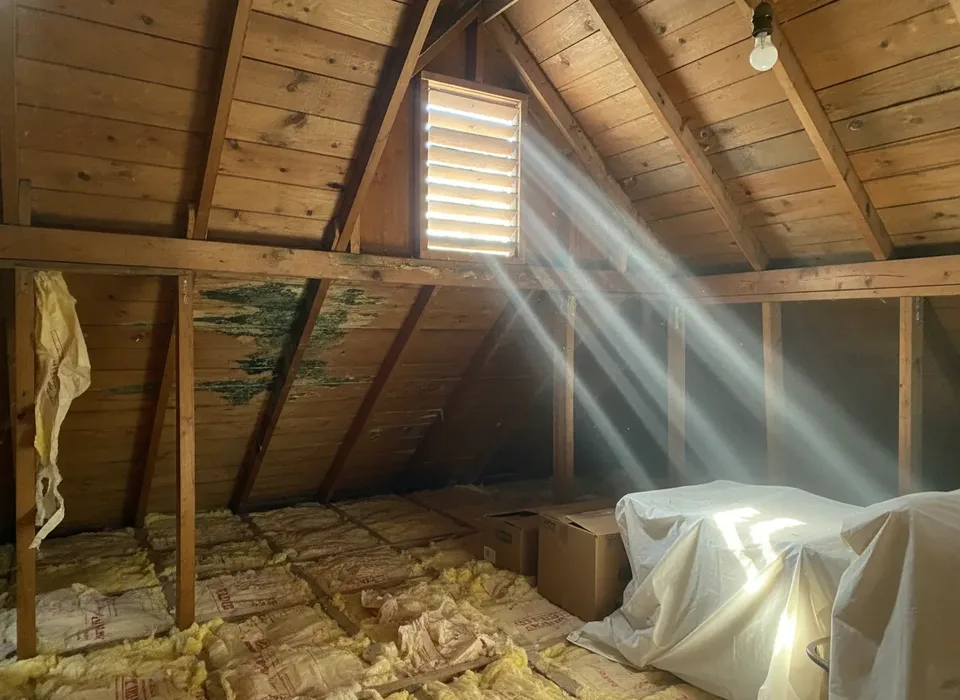
What's going on in the attic
- Gray or black staining on the roof sheathing, often near the eaves or the north side.
- Wet or matted insulation, or water stains on the ceiling below.
- Frost on nails and sheathing on cold mornings that drips as it melts.
- A bathroom fan duct that ends in the attic instead of outside.
- A musty smell when you open the attic hatch.
Many attic mold problems are slow, so the first clue is often a ceiling stain or a home inspector's report.
Why Dayton, Ohio attics get wet
Ice dams. Dayton averages about 110 nights a year at or below freezing and about 25 inches of snow (NOAA 1991 to 2020). Heat escaping into the attic melts snow on the roof, the water refreezes at the cold eaves and backs up under shingles. Ohio's own Residential Property Disclosure Form lists ice damming among causes of water damage.
Warm air from the house. Gaps around light fixtures, the attic hatch, plumbing stacks and chimneys let warm, moist air into the attic in winter, where it condenses on cold sheathing. Bath and kitchen fans that dump into the attic make it worse.
Blocked ventilation. Insulation pushed into the eaves can block soffit vents, so the attic can't dry out.
Rain that never stops. With 41.33 inches of precipitation a year and no dry month, a small roof leak keeps feeding the same spot.
Storm-damaged and patched roofs since 2019
The 2019 Memorial Day tornadoes tore through the Dayton area. In Trotwood, 500 homes were damaged and 59 destroyed. Beavercreek had EF3 damage, and Old North Dayton and Shiloh were in the path. Many roofs were tarped, patched or quickly replaced in the months after.
Some of those repairs held up. Others were never finished properly, and a patch that leaks a little in every rain can soak insulation and sheathing for years without an obvious drip. Rain driven through broken roofs and windows during the storm may also have left mold in wall cavities that were never opened. If your home had storm damage and you now smell must in the upper floor, an inspection that includes the attic is a sensible first step.
After the tornadoes, Ohio also pursued contractors who took payment for roof repairs and did little or no work. That history is a good reason to use the checklist below.
What attic mold companies typically do
Find the water
Check the roof deck, flashing, vents, bath fan ducts and air leaks. A roofer may need to fix the source.
Protect the house
Seal the hatch and work area so dust doesn't fall into the rooms below, and run HEPA filtration.
Remove and clean
Wet insulation comes out. Sheathing and rafters are HEPA-vacuumed and cleaned, or replaced if they are soft or rotted.
Fix airflow
Reroute bath fans outside, clear soffit vents and seal air leaks so the problem doesn't return.
Check and re-insulate
Readings and ideally a clearance check, then new insulation.
What attic mold removal costs
| Item | Typical range | Source |
|---|---|---|
| Attic | $1,000–$4,000 | This Old House 2026 (Fixr: up to $9,000) |
| Mold remediation, per sq ft | $10–$25 | This Old House 2026 (Fixr: $10–$30) |
| Typical remediation job | $1,200–$3,750 (avg ≈ $2,300) | This Old House 2026 |
Roof repairs, ventilation changes and new insulation are often separate. See the cost guide and our article on attic mold and ice dams in Ohio.
Permits, insurance and contracts
Permits. Cleaning and removing insulation usually need no permit. Roofing, structural, electrical and storm-damage repairs generally do. Check with City of Dayton Building Inspection or your city's building department.
Insurance. Mold is usually covered only after a covered, sudden water loss, such as storm damage you reported promptly. Long-term leaks and condensation usually aren't covered. Talk to your agent; nobody can promise coverage.
Contracts. Get a written contract and an itemized estimate. Ohio's Home Solicitation Sales Act generally gives 3 business days to cancel a sale made at your home (ORC 1345.22). An emergency waiver must be your own handwritten, signed statement, so be wary of a pre-printed one. Avoid large deposits and cash to individuals, and report problems to the Ohio Attorney General.
When it's urgent
- Water is dripping through a ceiling or light fixture. Turn off that circuit.
- Sheathing feels soft when you press it, which can mean rot.
- A ceiling is sagging from wet insulation.
Questions to ask attic mold companies
- What caused it: a leak, an ice dam, a bath fan or air leaks? Who fixes that?
- Can you send a certificate of insurance?
- Is roofing or electrical work part of the job, and will you pull the permit?
- Will the written contract include the 3-day cancellation notice if we sign at my home?
- How will you keep dust out of the rooms below, and will there be a clearance check?
Attic mold questions
How much does attic mold removal cost?
This Old House (2026) puts attic mold remediation at $1,000 to $4,000, and Fixr lists jobs up to $9,000. Roof repair, ventilation fixes and new insulation are usually extra. Quotes from the companies depend on how much sheathing is affected and how easy the attic is to work in.
Can attic mold affect the rooms below?
It can, mainly through air leaks around fixtures, the hatch and gaps in the ceiling. Any mold can bother sensitive people, so keep the hatch closed, avoid stirring up insulation, and see a doctor about symptoms. Fixing the moisture and air leaks matters as much as cleaning.
My roof was patched after the 2019 tornadoes. Should I check the attic?
It's worth a look, especially if you notice ceiling stains or a musty upper floor. Some quick storm repairs were never finished properly and can leak a little in every rain. An inspection that includes the attic and a moisture meter can answer the question.
Do ice dams cause attic mold?
They can. Meltwater backs up under shingles at the eaves and soaks sheathing and insulation. The usual root causes are heat escaping into the attic and poor ventilation, so a lasting fix often includes air sealing and clearing soffit vents, not just a new roof edge.
Does insurance cover attic mold?
Usually only when the mold follows a covered, sudden water loss, such as storm damage. Slow leaks, condensation and poor ventilation generally aren't covered. Check your policy and talk to your agent before work starts.
Get attic mold quotes in Dayton, Ohio
Tell us what you found, whether there's a ceiling stain or active leak, whether the roof was repaired after a storm, and where the bath fans vent. We pass it to independent companies in the Miami Valley, and they reply with quotes.
Independent Miami Valley companies reply to you directly. There is no obligation, and you choose who to hire. Prefer to talk? Call (937) 466-8339
Seeing or smelling mold? Get a clear plan.
Free, no-pressure quotes from independent companies across Dayton, Kettering, Beavercreek, Huber Heights and the Miami Valley.