
Mold Inspection & Testing in Dayton, Ohio
Looking for a mold inspection in Dayton, Ohio, or mold testing before you buy, sell or rent? Describe the problem once and independent Miami Valley inspection companies reply with free quotes. This page explains when testing is worth paying for, what it can and can't tell you, and what it usually costs.
Get a Free Quote Call (937) 466-8339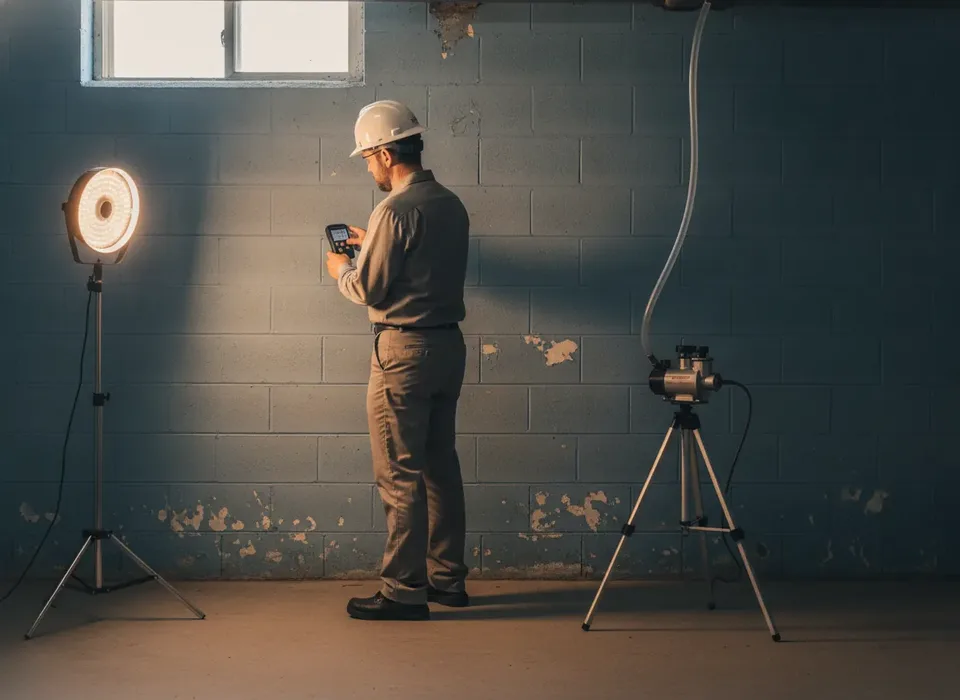
When a mold inspection makes sense
Most people look for mold testing in Dayton, Ohio for one of a few reasons:
- A musty smell in the basement or a closet, with nothing visible.
- A finished basement took on water after heavy rain and the walls look fine.
- You are buying or selling a house and want a written record of its condition.
- Remediation just finished and you want proof the area is clean and dry.
- A landlord and tenant disagree about what is in the unit and need documentation.
An inspection is mostly about finding water and mapping damage. Samples are only one part. If you can already see a patch bigger than a bath towel, you may be ready for mold removal quotes instead.
What Public Health and the EPA say about testing
Public Health - Dayton & Montgomery County follows the EPA's mold guidance, which does not recommend routine testing. If you can see or smell mold, you already know there is a moisture problem to fix. Public Health also does not do in-home mold inspections or indoor mold testing, so testing in the Miami Valley is done by private companies.
There are no federal or Ohio limits for mold in a home. Any number on a lab report is compared with outdoor air or with other rooms, not with a legal standard.
Plain rule: if mold is visible and the water source is known, the fix is the same whatever a lab says. Pay for testing when the answer will change a decision.
What inspection companies typically do
Ohio does not set a standard for how a mold inspection is done, so quotes vary. A thorough visit from the companies we connect you with usually covers these steps:
Interview and walk-through
The inspector asks about leaks, sump pump trouble, heavy rains and past repairs, then checks the basement, attic, crawl space, bathrooms and window sills.
Moisture mapping
A moisture meter and often a thermal camera trace damp drywall, framing and subfloor. This is how hidden water gets found when nothing shows on the surface.
Sampling when it answers a question
Air samples inside and outside, or tape and swab samples from a surface, go to an outside lab. Ask which lab and whether it is accredited.
Written report
Photos, moisture readings, any lab results, the likely water source and a suggested removal scope you can hand to several remediation companies.
Clearance check later
After removal, an independent inspector can return to confirm the area is clean and dry before walls are closed.
What mold testing can and can't tell you
It can point toward a hidden source, compare indoor air with outdoor air, identify what is growing on a surface, and document conditions before and after a cleanup. EPA notes that surface sampling may help show whether an area was adequately cleaned.
It can't give you a safe number, because none exists. It doesn't fix anything either: mold comes back when the water problem stays. Air samples are also a snapshot, since outdoor spore levels change with the weather.
Independent inspector or the remediation company?
Ohio does not issue a mold-specific license for inspectors or remediators, and Public Health - Dayton & Montgomery County does not regulate mold. Nobody checks credentials for you. That makes independence worth asking about.
For an obvious bathroom job, a remediation company's own walk-through may be enough, and many companies offer free estimates. For hidden mold, a large job, a sale or a rental dispute, an inspector who will not be paid for the removal gives you a scope nobody profits from inflating. Send that report to several remediators and compare like with like.
Some local testing companies also offer radon, asbestos or lead testing. In Ohio, asbestos inspection falls under Ohio EPA licensing and lead inspection under Ohio Department of Health licensing, so ask for those credentials separately.
Why Dayton, Ohio homes hide mold
NOAA's 1991 to 2020 normals for Dayton International Airport show 41.33 inches of precipitation a year, with every month above 2.35 inches. April and May are the wettest. Average humidity runs about 70%. There is no dry season when a damp basement fully dries out, and by late October 2026 the airport gauge had already passed its full-year normal (NOAA daily data).
The housing is old, too. Dayton's median year built is 1951, and 85.4% of its homes were built before 1980. A good inspection here checks the basement, the attic and any crawl space, not just the room with the smell.
Buying or selling a house
The Ohio Residential Property Disclosure Form asks about water intrusion and moisture in the basement or crawl space, and whether the home was ever inspected for mold. Sellers should keep inspection reports and remediation invoices and talk to their agent or attorney about the form. Buyers often order an inspection during the contract period. More in our guide to buying or selling a house with mold in Ohio.
What mold inspection costs
| Item | Typical range | Source |
|---|---|---|
| Mold inspection, Dayton | $292–$457 | homeyou, Sep 2026 |
| Inspection with lab testing, national | $450–$800 (avg ≈ $500) | Fixr 2025 |
| Air testing | $500–$700 | Fixr 2025 |
Lab fees are usually charged per sample, and clearance testing after remediation is often a separate invoice. Ask each company what its price includes: the number of samples, the report and any return visit. For full remediation ranges, see the mold remediation cost guide, or read do you need mold testing in Ohio.
When to move faster
- Water is still coming in from a pipe, roof or sump. Stop the water first.
- Drywall, carpet or insulation got wet more than a day or two ago. EPA advises drying wet materials within 24 to 48 hours.
- Someone in the home has asthma, allergies or a weak immune system. Any mold can bother sensitive people, so see a doctor about symptoms and keep them away from the area.
Questions to ask before you book
- Do you also do removal? If so, will you put in writing that you won't bid on it?
- Which lab analyzes your samples, and is it accredited?
- Will you check the basement, attic and crawl space with a moisture meter or thermal camera?
- Can I see a sample report with photos, readings and a suggested scope?
- Can you send a certificate of insurance and show your Ohio Secretary of State business registration?
- Will you return for a clearance check after remediation, and what does that cost?
Mold inspection and testing questions
How much does a mold inspection cost in Dayton, Ohio?
One published estimate puts a Dayton mold inspection at $292 to $457 (homeyou, Sep 2026). A national guide lists inspection with lab testing at $450 to $800 and air testing at $500 to $700 (Fixr 2025). Sample counts, thermal imaging and the report change the price, so ask each company what its number includes.
Are mold inspectors licensed in Ohio?
Ohio does not issue a mold-specific license for inspectors or remediators, and Public Health - Dayton & Montgomery County does not regulate mold. Private training certificates exist but are optional. Ask about insurance, which lab analyzes samples, and for a sample report. Asbestos and lead inspections are separate and do need state licenses.
Will Public Health test my home for mold?
No. Public Health - Dayton & Montgomery County does not do in-home mold inspections or indoor mold testing. It follows EPA guidance: if you can see or smell mold, fix the moisture and clean or remove the growth. For testing, you hire a private company.
If I can see the mold, do I still need a test?
Usually not. EPA says sampling is generally unnecessary when mold is visible, because the plan is the same: fix the water and remove the growth. Testing earns its fee when you smell mold but can't find it, during a home sale, in a rental dispute, or to confirm a cleanup worked.
Is there a safe level of mold in Ohio?
No federal or Ohio limit exists for indoor mold, so no lab can certify a safe number. Reports compare indoor samples with outdoor air or other rooms. Every home has some mold spores; what matters is active growth and the moisture feeding it.
Get mold inspection quotes in Dayton, Ohio
Tell us what you smell or see, where it is, whether the home has a basement or crawl space, and whether you are buying, selling or renting. We pass it to independent inspection and remediation companies in the Miami Valley, and they reply with quotes.
Independent Miami Valley companies reply to you directly. There is no obligation, and you choose who to hire. Prefer to talk? Call (937) 466-8339
Seeing or smelling mold? Get a clear plan.
Free, no-pressure quotes from independent companies across Dayton, Kettering, Beavercreek, Huber Heights and the Miami Valley.