
Not legal or real estate advice. Dayton Mold Remediation Pros is a free quote service. This guide explains what Ohio's disclosure form asks and how mold usually comes up in a sale. Decisions about what to disclose, what to ask for and how to word a contract belong with your real estate agent or an Ohio attorney.
The Dayton area has a lot of older and vacant housing. In the city of Dayton, the median home was built in 1951, 36.7% of homes predate 1940, and 16.9% of housing units were vacant (Census ACS 2024). Old basements, estate sales and long-empty houses mean mold comes up in a large share of local sales.
What the Ohio disclosure form asks about water and mold
Most Ohio home sellers complete the state's Residential Property Disclosure Form. Section D, Water Intrusion, asks:
- Whether the seller knows of any previous or current water leakage, water accumulation, excess moisture or other defects, including any area below grade, basement or crawl space.
- Whether the seller knows of water or moisture damage to floors, walls or ceilings from flooding, seepage, condensation, ice damming, sewer overflow or backup, or leaking pipes, fixtures or appliances.
- Whether the property has ever been inspected for mold by a qualified inspector, with space to describe any report and remediation.
The form also tells buyers that every home contains mold, that some people are more sensitive than others, and that a concerned buyer is encouraged to have a mold inspection done by a qualified inspector. Other parts ask about the sump pump, flood plain location and drainage. Ohio does not define "qualified inspector" on the form, and the state does not license mold inspectors.
If you are selling
- Fix the water first. Buyers and their inspectors look for the cause: the sump, grading, downspouts, a roof leak or a plumbing drip.
- Keep the paper trail. Save inspection reports, remediation scopes, invoices, photos and any clearance results. Records of a finished job tend to reassure buyers more than a fresh coat of paint.
- Talk to your agent or attorney about the form. They can advise how your history fits the questions. This page does not.
- Consider a pre-listing look. Finding a musty finished basement before you list gives you time to get quotes and fix it on your schedule, not during an inspection deadline.
If you are buying
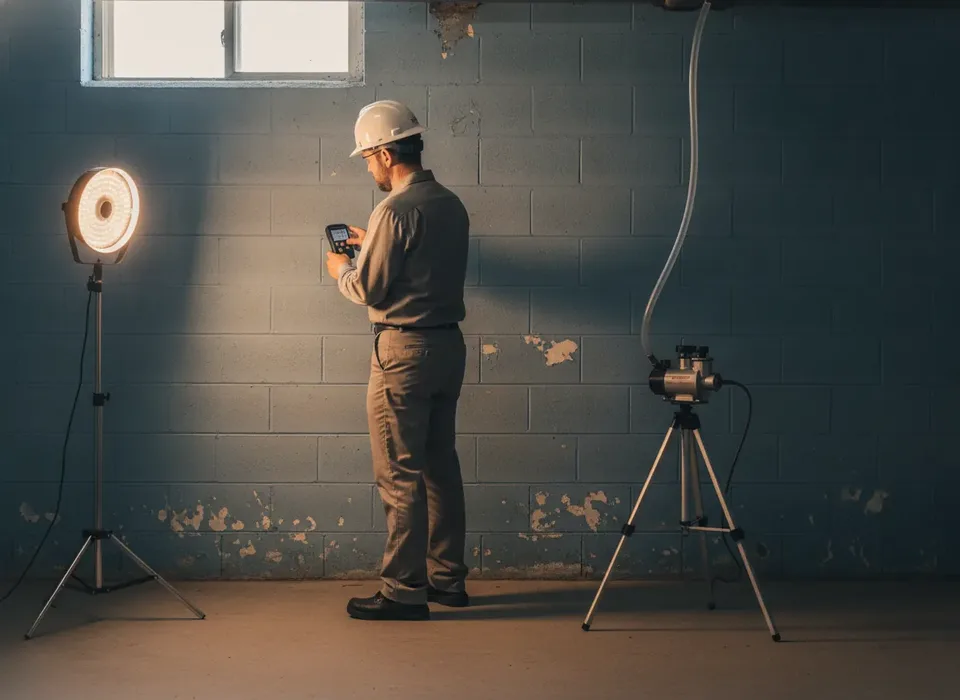
A general home inspection is a visual check. If it flags staining, a musty smell, efflorescence on basement walls or a wet crawl space, a mold-focused inspection can follow. EPA and Public Health - Dayton & Montgomery County say that if you can see or smell mold, testing usually is not needed to know there is a problem. Testing does help in a sale when mold may be hidden behind finished walls, when you want documentation, or when you want a clearance check on remediation the seller says was done.
There are no federal or Ohio limits for indoor mold, so no lab result is "passing" on its own. A good report ties findings to moisture: where it is wet, why, and what it will take to fix. An inspector who does not also sell remediation avoids a conflict of interest. See mold inspection and testing for what testing can and cannot tell you.
Vacant, estate and rehab homes
About 11% of all housing units in the city of Dayton are vacant for reasons other than sale, rent or seasonal use, and Trotwood's vacancy rate is 11.9% (Census ACS 2024). Houses that sit empty often have the heat off, no dehumidifier running and a sump pump that is unplugged or failed. A basement can take on water through a wet spring with no one noticing.
For investors and buyers of these homes:
- Ask for utilities on during the inspection so the sump, furnace and plumbing can be checked.
- Look hard at the basement, attic and under sinks before you close or start demolition.
- In older homes, ask whether pipe insulation, floor tile or old paint should be tested for asbestos or lead before tear-out. Asbestos abatement is licensed by Ohio EPA; lead abatement by ODH, and EPA's Lead-Safe rule covers paint work in pre-1978 homes.
- If the house will be a Dayton rental, plumbing, electrical and HVAC work must be done by a City-registered contractor.
What mold work can cost in a sale
| Item | Typical range | Source |
|---|---|---|
| Mold inspection, Dayton | $292–$457 | homeyou, Sep 2026 |
| Inspection with lab testing, national | $450–$800 (avg ≈ $500) | Fixr 2025 |
| Basement | $1,500–$4,000 | Fixr 2025 (This Old House: $500–$3,000) |
| Crawl space | $500–$2,000 | Fixr 2025; This Old House 2026 |
| Attic | $1,000–$4,000 | This Old House 2026 (Fixr: up to $9,000) |
| Whole house | $10,000–$30,000 | Fixr 2025; This Old House 2026 |
Published estimates, not quotes (homeyou Sep 2026; Fixr 2025; This Old House Mar 2026). Dayton quotes come from the companies, not from this site. Written, itemized quotes are useful in negotiation because both sides can see the scope. See the full Dayton, OH mold remediation cost guide, and the basement mold page for the most common problem area.
Timing tips for a deal
Inspection windows are short. Request quotes as soon as mold shows up in a report, ask companies to describe the source and scope in writing, and keep in mind that a written contract signed at the home generally carries a 3-day cancel right in Ohio. If the seller remediates before closing, ask for the invoice and any clearance results.
Frequently asked questions
Do I have to disclose mold when selling a house in Ohio?
The Ohio Residential Property Disclosure Form asks about past or current water intrusion, moisture damage, and whether the property was ever inspected for mold by a qualified inspector. How to answer depends on what you know about your house. Talk with your real estate agent or an Ohio attorney, and keep any reports, invoices and clearance results.
Should I get a mold test before buying a house in Ohio?
Not always. If mold is visible, testing usually is not needed to know there is a problem, and there are no federal or Ohio mold limits to test against. Testing helps when you smell mustiness but see nothing, when the seller reports past water problems, or when you want a baseline. An independent inspector with moisture readings is often more useful than air samples alone.
Can you sell a house with mold in Ohio?
Yes. Houses with mold are sold all the time, either after remediation or as-is with a price that reflects the work. Buyers and lenders will want to know what happened, so documentation helps: the cause, the scope of work, invoices and any clearance results. Your agent or an Ohio attorney can advise on the disclosure form and contract.
Should I check a vacant house for mold before closing?
It is a good idea. Vacant homes often sit without heat, dehumidification or a working sump pump, and a basement can flood with no one noticing. Ask for the utilities to be on for the inspection, look closely at the basement and attic, and get an estimate for any mold work before you finalize your offer or start demolition.
Get free quotes from independent companies
Sellers, buyers and investors can describe the house, the inspection findings and the deadline, and independent companies across Dayton, Kettering, Centerville, Huber Heights and the Miami Valley will reply with written quotes. Request a free quote or call (937) 466-8339. Dayton Mold Remediation Pros is a free quote service, not an inspector, real estate agent or attorney.