
The short answer. Mold is usually covered only when it comes from a covered, sudden water loss. Seepage, sump failure and sewer backup usually need a separate endorsement. Flood needs a separate flood policy, typically with a 30-day wait. Nothing here promises coverage; your policy wording decides. This is general information, not insurance advice.
Dayton, Ohio gets about 41 inches of precipitation in a normal year, spread across all twelve months (NOAA 1991–2020, Dayton International Airport). By late October 2026, the airport gauge had already passed its full-year normal (NOAA daily data). Wet years like this one are when policy fine print matters, because the way water got in usually decides whether mold cleanup is paid.
Sudden water versus slow water
Homeowners policies are built around sudden and accidental losses. Mold tends to follow the same logic as the water that caused it.
- Often covered: a pipe bursts in a cold snap, a washing machine hose splits, a water heater fails. If the water damage is covered, mold cleanup tied to it may be covered too, often up to a separate mold limit.
- Usually not covered: a slow drip under a sink for months, a shower pan that leaks a little every day, condensation from high humidity, or poor ventilation in a bathroom or attic.
- Depends on the policy: storm damage to a roof that lets rain in. The roof claim usually decides what happens with the mold.
Many policies include a mold or fungi sub-limit, a cap on what they pay for mold even when the cause is covered. Look for words like "fungi," "wet or dry rot" and "bacteria" in your exclusions and endorsements. The amount varies by insurer and policy, so ask your agent rather than relying on a number you read online.
Sump pump failure and sewer backup
These are the two most common ways Dayton-area basements get wet, and they are the two most often left out of a standard policy. Much of the area sits in the Great Miami River valley over saturated sand and gravel fed by the rivers, and basements are common, so many homes depend on a sump pump. Older homes also have older sewer laterals.
Coverage for sewer or drain backup and sump overflow is usually an endorsement you add to a homeowners policy, with its own limit. In its March 2026 severe weather release, the Ohio Department of Insurance urged homeowners to determine whether sewer or drain backup coverage is appropriate to add. If you have a finished basement, that is a question worth asking your agent this week.
Flood is a separate policy
Flood insurance is not typically included in standard homeowners or renters policies. The National Flood Insurance Program provides most flood policies, and the Ohio Department of Insurance notes a 30-day waiting period before coverage begins.
The Miami Conservancy District dams built after the 1913 Great Dayton Flood protect against big river floods. They do not stop flash flooding on a local street, groundwater pushing through a basement wall or a sump that cannot keep up. Living behind a levee is not a reason to skip the coverage questions.
| What happened | How standard policies usually treat it | What to ask your agent |
|---|---|---|
| Pipe bursts in January | Sudden and accidental; often covered | Is there a mold sub-limit, and what is it? |
| Slow leak under a sink or toilet | Usually excluded as gradual | Is any gradual leak coverage available? |
| Sump pump fails in a heavy rain | Usually needs an endorsement | Do I have sump or water backup coverage, and how much? |
| Sewer backs up into the basement | Usually needs an endorsement | Is sewer or drain backup on my policy? |
| Creek or river water enters the home | Flood; needs a separate flood policy | Am I in a flood zone, and what would flood coverage cost? |
| Storm tears off shingles and rain gets in | Depends on the roof claim | How is interior water and mold handled on a wind claim? |
What to do in the first 48 hours
Stop the water
Shut off the supply, check the sump and its power, and keep people out of standing water near outlets.
Document everything
Take photos and video before you move anything: water lines on walls, the failed part, the sump pit, wet carpet.
Call your insurer
Report the loss promptly and ask what documentation and estimates they want.
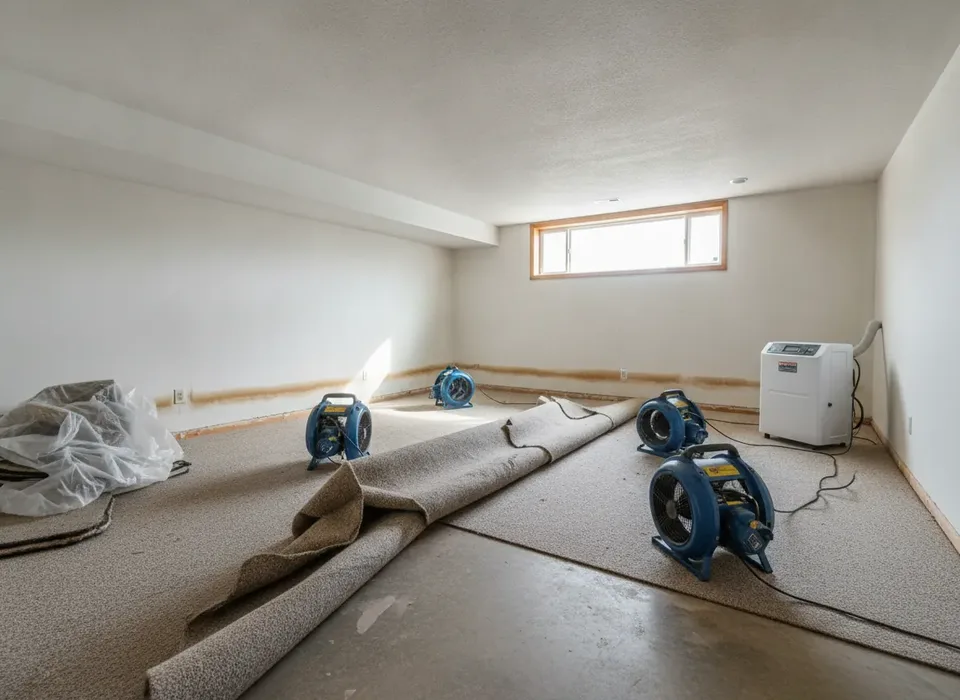
Start drying
EPA advises drying water-damaged areas within 24 to 48 hours. Public Health notes mold can begin to grow after one or two days of being wet.
Get written estimates
Itemized estimates from independent companies help you and the adjuster compare scope and cost.
Keep damaged materials or clear photos of them until the adjuster says otherwise, and keep every receipt for fans, dehumidifiers and emergency work.
What mold work costs if you pay out of pocket
Published estimates give a sense of scale: a typical remediation job runs $1,200–$3,750 (This Old House 2026), a basement $1,500–$4,000 (Fixr 2025), and HVAC or duct work $3,000–$10,000 (Fixr 2025). A Dayton mold inspection runs $292–$457 (homeyou, Sep 2026). These are published estimates, not quotes. The Dayton, OH mold remediation cost guide has the full table and a calculator. For water losses specifically, see water damage, flood and sump mold.
Storm damage and door-knockers
After the 2019 Memorial Day tornadoes, Ohio's Attorney General brought cases against contractors who took money for roof repairs in the Dayton area and did little or no work. If someone knocks after a storm offering to "handle the insurance," slow down. Get a written contract, know your 3-day cancel right for sales made at home, and read our guide to hiring a mold remediation company in Ohio. Storm-damage and roofing repairs generally need a permit; check with City of Dayton Building Inspection or your city's building department.
Frequently asked questions
Does homeowners insurance cover mold in Ohio?
Usually only when the mold results from a covered, sudden water loss, such as a burst pipe or a failed supply line. Mold from long-term leaks, seepage, humidity or poor ventilation is usually excluded, and many policies cap mold payments. Every policy is different, so read your declarations page and policy wording and ask your agent.
Does insurance cover sump pump failure in Ohio?
Usually not under a standard homeowners policy. Sump pump failure and sewer or drain backup typically need a separate endorsement added to the policy, and a flood policy is a separate product again. The Ohio Department of Insurance urged homeowners in 2026 to decide whether sewer or drain backup coverage is right for them. Check what your policy includes before the next storm.
Does flood insurance start right away?
No. Flood insurance is not part of a standard homeowners or renters policy and must be bought separately, mostly through the National Flood Insurance Program. The Ohio Department of Insurance notes a 30-day waiting period before coverage begins, so buying it when rain is in the forecast does not help with that storm.
Should I get a mold test for an insurance claim?
Testing is not required to see mold, and EPA and Public Health say visible mold usually does not need testing. For a claim, though, a written inspection report with moisture readings and photos can help document the cause and extent. A clearance check after the work also shows the job was finished. Ask your adjuster what documentation they want.
Get free quotes from independent companies
Describe the water source, the rooms affected and whether a claim is open, and independent companies across Dayton, Kettering, Beavercreek, Huber Heights and the Miami Valley will reply with itemized quotes. Request a free quote or call (937) 466-8339. Dayton Mold Remediation Pros is a free quote service, not an insurer or a mold company, and nothing here is insurance advice.