
General information, not legal advice. Dayton Mold Remediation Pros is a free quote service, not a law firm. The rules below summarize the Ohio Revised Code as published in October 2026. Before you deposit rent with a court or end a lease, contact Legal Aid of Western Ohio or an Ohio attorney about your own situation.
Renting is common here. In the city of Dayton, Ohio, 51.6% of occupied homes are rented, and Fairborn (48.8%), Riverside (44.2%) and Trotwood (42.4%) are not far behind (Census ACS 2024). The housing is also old: 85.4% of Dayton's homes were built before 1980. Older plumbing, basements and roofs plus rain in every month of the year mean mold in rentals is a routine problem, not a rare one.
Does Ohio have a mold law for rentals?
Not a mold-specific one. Ohio sets no mold limits, and Public Health - Dayton & Montgomery County says it does not provide regulatory oversight for mold in a home, rental property or business. It cannot make a building owner clean up mold, and it does not test inside homes.
What Ohio does have is a general landlord duty. ORC 5321.04 requires a landlord to:
- Comply with building, housing, health and safety codes that materially affect health and safety.
- Make repairs and do what is reasonably necessary to keep the premises fit and habitable.
- Keep common areas safe and sanitary.
- Keep electrical, plumbing, sanitary, heating, ventilating and air conditioning fixtures supplied by the landlord in good working order.
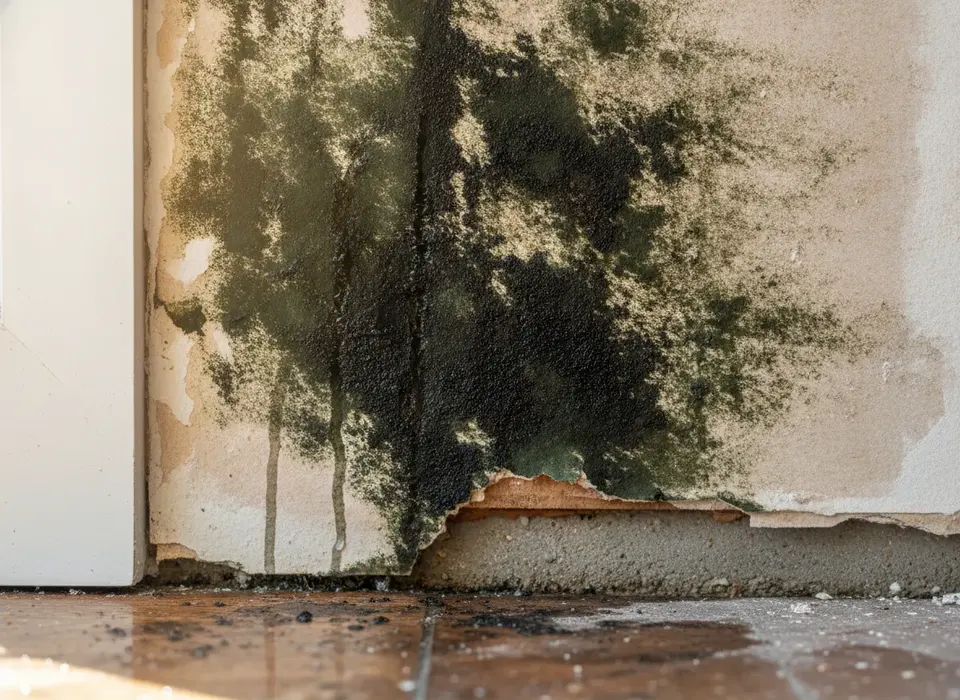
Mold is not named, but the things that cause it usually are. A dripping supply line, a failed bath fan, a roof leak or a furnace that sweats into the ductwork all fall under that list. In practice, the water source is often the bigger legal issue than the mold itself.
Are landlords responsible for mold in Ohio?
Usually for the cause, yes. If mold comes from a leak, a plumbing failure, a roof problem or broken ventilation, fixing it is part of keeping the unit habitable. Tenants have a part too: report leaks quickly, run bath fans, and avoid blocking vents or drying laundry indoors without ventilation. Your lease may list more.
Small surface spots are a shared, everyday job. EPA says a homeowner or occupant can often clean an area under about 10 square feet, roughly a 3 ft by 3 ft patch, and Public Health recommends soap and water rather than bleach. Even if you wipe a spot, tell the landlord in writing when it keeps coming back. Recurring mold means the water problem has not been fixed.
How to give your landlord written notice
Take dated photos
Photograph the mold, the area around it and any water source: a ceiling stain, a wet baseboard, a dripping trap. Include something for scale.
Put it in writing
Describe where the mold is, how big it is, when you first saw it and any leak you suspect. ORC 5321.07 says the notice goes to the person or place where rent is normally paid.
Keep copies
Save the letter or email, any reply and the dates. After a phone call, send a short message that sums it up.
Allow access
Ohio law presumes 24 hours is reasonable notice for a landlord to enter. Letting repairs happen protects your position.
Stay current on rent
The court remedy below is only open to tenants who are current in rent payments.
What if the landlord does not fix it?
ORC 5321.07 is the main tool. If you gave written notice and the landlord does not remedy the condition within a reasonable time considering how severe it is, or within 30 days, whichever is sooner, a tenant who is current on rent may:
- Deposit all rent with the clerk of the municipal or county court, instead of paying the landlord.
- Ask the court to order the repair, reduce the rent, or use the deposited rent for repairs.
- End the rental agreement.
There are exclusions. The section does not apply to a landlord with three or fewer units who gave written notice of that in the lease, and it does not apply to student tenants, which matters near Wright State University in Fairborn. Courts have their own forms. Kettering Municipal Court, for example, says there is no charge to file a rent escrow request and that it collects a 1% fee on deposits.
Simply keeping the rent is a different thing and can lead to eviction. Talk to Legal Aid of Western Ohio before you use the court process.
| Step | What Ohio law says | Practical tip |
|---|---|---|
| Landlord duty | Keep the unit fit and habitable; keep plumbing, heating and ventilation working (ORC 5321.04) | Point to the water source, not just the mold |
| Notice | In writing, to where rent is normally paid (ORC 5321.07) | Photos plus a dated letter or email |
| Repair time | A reasonable time or 30 days, whichever is sooner | Active leaks justify asking for faster action |
| Court remedy | Deposit rent with the court clerk if current on rent | Ask Legal Aid first; exclusions apply |
Who else can help in Dayton, Ohio?
City of Dayton Housing Inspection enforces property maintenance codes for structural housing conditions, inside and out. Reports go through the City Call Center. Tenants in Kettering, Fairborn and other suburbs should check with their own city. Legal Aid of Western Ohio helps eligible tenants with rent escrow and lease questions.
About health: any type or color of mold can bother people who are sensitive to it. If you or your children have symptoms, see a doctor, and mention the mold.
For landlords: what a clean fix looks like
- Find and fix the water first. Cleaning without fixing the leak, sump or vent means the mold comes back.
- Use City-registered trades in Dayton rentals. The City of Dayton requires a registered contractor for plumbing, electrical and HVAC work in rental property, even in a double where the owner lives in one side.
- Scope larger jobs. Above about 10 square feet, independent remediation companies typically set up containment, run HEPA filtration and remove wet porous materials.
- Document it. Keep the scope, invoice and any clearance results. They help with a tenant dispute and later on the Ohio disclosure form if you sell.
- Ask about older materials. In pre-1980 buildings, ask whether pipe insulation, floor tile or old paint will be tested before tear-out.
For budgeting, published ranges put a bathroom at $500–$1,500, a basement at $1,500–$4,000 and a typical remediation job at $1,200–$3,750 (Fixr 2025; This Old House 2026). These are published estimates, not quotes. See the mold remediation cost guide for Dayton, OH, and the rental and tenant mold page for both sides of the lease. If a dispute needs documentation, an independent mold inspection can help.
Frequently asked questions
Are landlords responsible for mold in Ohio?
Ohio has no mold-specific statute, but ORC 5321.04 requires landlords to keep a rental fit and habitable, follow housing and health codes, and keep plumbing, heating and ventilation working. Most rental mold traces back to a leak or a ventilation problem, which falls under those duties. This is general information, not legal advice; contact Legal Aid of Western Ohio or an Ohio attorney.
Can I stop paying rent because of mold in Ohio?
Not by simply keeping the rent. Under ORC 5321.07, a tenant who is current on rent and gave written notice may deposit rent with the court clerk if the landlord does not fix the problem within a reasonable time or 30 days, whichever is sooner. There are exclusions. This is general information, not legal advice; contact Legal Aid of Western Ohio or an Ohio attorney.
Does mold make a rental uninhabitable in Ohio?
Ohio law does not set a mold threshold. The question is whether the unit is fit and habitable and whether the landlord kept up with codes and repairs under ORC 5321.04. A small spot on caulk is different from a soaked wall. City of Dayton Housing Inspection handles housing code conditions. This is general information, not legal advice; contact Legal Aid of Western Ohio or an Ohio attorney.
Will Public Health test my apartment for mold?
No. Public Health - Dayton & Montgomery County says it does not provide in-home mold inspections or indoor mold testing, and it does not regulate mold in rentals. It follows EPA guidance: if you can see or smell mold, testing usually is not needed. It points tenants to the property owner and, if needed, Legal Aid of Western Ohio.
Get free quotes from independent companies
Landlords, property managers and tenants can describe the unit, the leak and the rooms affected, and independent companies across Dayton, Fairborn, Trotwood, Kettering and the Miami Valley will reply with quotes. Request a free quote or call (937) 466-8339. Dayton Mold Remediation Pros is a free quote service, not a mold company, and this page is general information, not legal advice; contact Legal Aid of Western Ohio or an Ohio attorney.