
When a sump pump fails in Dayton, Ohio, it usually happens during the worst storm of the season, when the pit fills fastest and the power is most likely to flicker. By the time anyone notices, there may be an inch of water across the basement floor.
What you do in the next 48 hours decides whether this is a wet-vac weekend or a mold job. Here is the checklist.
Safety first. Don't walk into standing water if outlets, cords or appliances may be underwater. Shut off power to the basement at the panel if you can reach it from a dry spot, or call an electrician or the utility. If you smell gas, leave and call the gas company.
The first-hour checklist
Stop the water
Check whether the pump lost power, tripped a breaker, burned out, or has a stuck float. Reset or replace it if you can do so safely, or set up a portable pump.
Take photos and video
Record the water line, the pump, damaged items and the date before you move anything. Insurers and companies both ask for them.
Call your insurance agent
Ask whether you have a sump or water-backup endorsement and what the agent needs before cleanup.
Get the water out
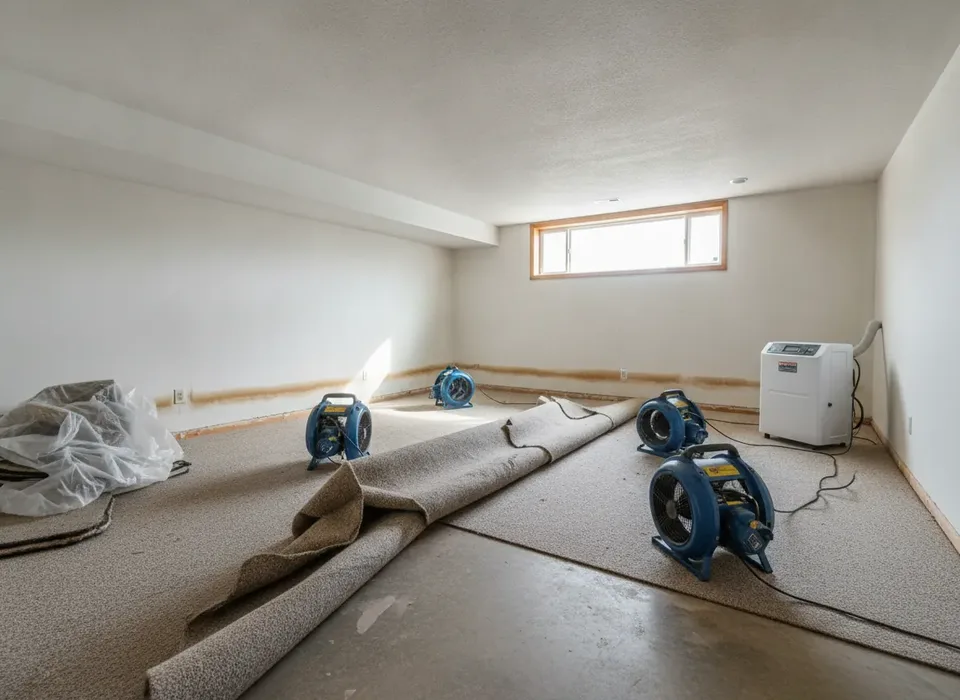
Use a wet-vac or pump, then open the space up with fans and a dehumidifier.
Lift and sort
Move boxes, furniture and rugs off the wet floor. Keep kids and pets out.
The 24 to 48 hour window
EPA advises drying water-damaged areas and items within 24 to 48 hours to prevent mold growth, and Public Health - Dayton & Montgomery County says mold can begin to grow after one or two days of something being wet. In a Miami Valley basement, where summer humidity averages about 70% outdoors and concrete stays cool, things don't dry by themselves. Plan on running a dehumidifier and fans for days, not hours.
A moisture meter is the best way to know whether drywall and framing have actually dried. Companies that handle water damage use them to decide what can stay and what has to go.
What to save and what to toss
| Material | Clean groundwater, dried fast | Wet over 48 hours or sewer water |
|---|---|---|
| Concrete floor and block walls | Clean and dry | Clean, disinfect as advised, dry |
| Carpet pad | Usually replace | Replace |
| Wall-to-wall carpet | Sometimes saved if dried quickly | Usually replace |
| Drywall and paneling | Often cut above the water line | Cut above the water line |
| Insulation in walls | Usually replace if wet | Replace |
| Wood framing | Clean and dry | Clean, dry and check before closing up |
| Cardboard, paper, upholstered items | Dry fast or discard | Discard |
When in doubt, ask the companies that quote the job to explain each decision in writing.
Sump failure or sewer backup?
They look similar on the floor but are different problems. A sump pit collects groundwater from around the foundation. A sewer backup comes up through floor drains and toilets and carries sewage. Sewer water needs gloves, boots and more aggressive cleanup, and porous items it touched usually go. If you aren't sure where the water came from, treat it as contaminated.
Insurance after a sump failure
Mold is usually covered only after a covered, sudden water loss. Seepage, sump failure and sewer backup usually need a separate endorsement, and flood needs a separate flood policy, typically with a 30-day wait. Nobody can promise coverage before the insurer reviews the claim, including the company doing the work. Keep photos, receipts and every invoice. More in does homeowners insurance cover mold in Ohio.
Replacing or upgrading the pump
A failed pump is the cause, so fix it before the next storm. Common upgrades include a battery backup pump, a high-water alarm, a second pump in the pit, and a discharge line that carries water well away from the foundation. Electrical and plumbing changes, such as a new circuit or rerouted discharge piping, generally need a permit; check with City of Dayton Building Inspection or your city's building department. In Dayton rentals, plumbing and electrical work must be done by a City-registered contractor.
Watch for storm-day door-knockers
Wet basements bring fast sales pitches. Get a written contract and itemized estimate. For a sale made at your home, Ohio's Home Solicitation Sales Act generally gives you 3 business days to cancel (ORC 1345.22). An emergency waiver must be your own handwritten, signed statement, so be wary of anyone who hands you a pre-printed one. Avoid large deposits and cash to individuals, and report problems to the Ohio Attorney General.
What the cleanup can cost
Published ranges put basement mold remediation at $1,500–$4,000 (Fixr 2025; This Old House: $500–$3,000), and remediation generally at $10–$25 per square foot of affected area. These are published estimates, not quotes, and they don't include the pump, plumbing or rebuild. See the mold remediation cost guide for the full table and calculator.
After it's dry
Keep the dehumidifier running, test the pump every spring, and keep invoices and any clearance results. If you sell later, the Ohio Residential Property Disclosure Form asks about past water intrusion in the basement and lists the sump pump among the systems it covers; talk with your agent or attorney about it. For the bigger picture, read basement mold in Dayton, Ohio.
Frequently asked questions
How fast does mold grow after a sump pump fails?
Fast. Public Health - Dayton & Montgomery County says mold can begin to grow after one or two days of something being wet, and EPA advises drying water-damaged materials within 24 to 48 hours. That is why the first two days matter most. Carpet pad, drywall and cardboard that stay wet longer usually need to come out.
Does homeowners insurance cover a sump pump failure in Ohio?
Often not under a standard policy. Sump failure and sewer backup usually need a separate endorsement, and flood needs a separate flood policy, typically with a 30-day wait. Mold coverage, if any, usually depends on whether the water loss itself is covered. Read your declarations page and call your agent before cleanup starts. Nobody can promise coverage in advance.
Do I need a permit to replace a sump pump in Dayton, Ohio?
It depends on the work. Electrical and plumbing changes, such as a new circuit or rerouted discharge piping, generally need a permit. Check with City of Dayton Building Inspection or your city's building department. In Dayton rentals and non-owner-occupied homes, plumbing and electrical work must be done by a City-registered contractor.
Can I clean up after a sump pump failure myself?
For a small amount of clean groundwater caught quickly, often yes: pump or vacuum the water, pull up wet rugs, run fans and a dehumidifier, and clean small patches with soap and water. If water soaked drywall or wall-to-wall carpet, stayed more than two days, or came from a sewer backup, get help from companies that handle drying and remediation.
Water in the basement now, or a musty smell after the last storm? Describe it once and independent Miami Valley water damage and mold companies can reply, or call (937) 466-8339. See also water damage, flood and sump mold and basement mold.